Want to know the cheapest places to buy your baking ingredients from? Well I've done all of the hunting around for you!
If you're like me and you either bake for business, or just bake a lot, then you'll want to know all of the cheapest UK supermarkets and retailers to purchase your baking ingredients from.
Here I'll keep an up-to-date list of the cheapest places to buy your common baking
ingredients such as butter, nuts, flour, sugars, eggs, dairy, vanilla,
chocolate and speciality ingredients for all of your cake baking or business
needs.
If you buy in bulk, then you might try the obvious places like Costco and Bookers, however I have found that it isn't always the cheapest. You might be better off shopping at places like Aldi and Tesco, or even on Amazon Subscribe & Save. But in most cases, for your basic ingredients, it's Aldi every time!
In most cases I have noted the price for the most basic/value/everyday/smartprice/essentials option. So this is not a comparison chart for the quality of the ingredients, simply the cheapest options.
Last updated April 2017 (Please comment below if you find an ingredient cheaper elsewhere!)

Mix it, roll it, bake it, put all your love in it - Cake... such a simple thing that brings so much happiness and appreciation to others. Here I'll post you my favourite recipes, baking tips, and photos of my cakes for you all to drool over. I hope that you will be inspired to try some of my recipes yourself.
Showing posts with label Baking Tips. Show all posts
Showing posts with label Baking Tips. Show all posts

Cups to Grams Converter for Baking Ingredients

UK Alternatives to US Baking Ingredients

Most US ingredients easily translate into UK ingredients, they just have different names, however some ingredients are special to the US so for those I have suggested the best equivalents, or ways to make your own substitutes. There are a few things you can pick up in places like Selfridges or Tesco's American Grocery Isle, but why go out of your way to buy them, when you probably have something just as good in your cupboard already.
Recently, lots of the ingredients listed below have become available to buy in the "International Speciality Food" section of the Amazon Grocery store. However, if you don't want to be overloaded with cardboard and packaging, there's always a British supermarket alternative!!
See also: Cups to Grams Converter for Baking
How to Make Perfect Chewy Cookies

Ingredients
Why do my ingredients need to be at room temperature?Butter and eggs must be at room temperature before creaming, this allows them to combine easier and makes for even cooking. The softer the butter, the softer the cookies will be and the flatter they will spread out.
What's the best sugar to use for cookies?
Use a light muscavado sugar, soft light brown sugar or golden caster sugar. This will give your cookies a richer fudgier flavour, a caramel colour, and a more gooey texture.
Equipment
What kind of baking trays should I use?Ideally you want three good quality, flat, heavy, non-stick baking sheets. If they are good quality you shouldn't have to grease them. Alternatively use re-usable silicone baking paper.
Should I bake cookies in one batch?
It is best to bake your cookies in the centre of the oven. If you have a small oven and can't bake your cookies in one go, cool the trays down in between batches under cold water.
How do I keep my cookies soft?
To keep your cookies soft, make sure to store them in an airtight container. Cookies are nicest eaten when they are still a little warm. You can rewarm cookies in the oven for 5 minutes at 170°C. Or, make your cookie dough in advance and bake when you are ready to eat them.
How hot should my oven be?
Temperature is crucial to a desirable outcome. Pre-heat the oven to the temperature indicated in the recipe. If you're oven is unreliable or if you are not getting the desired cookie texture, invest in an oven thermometre.
Making
How much do I need to mix cookie dough?Don't overmix. Beating too much air into cookies will make them rise too much resulting in a more "cakey" texture. It's important to cream your butter, sugar & eggs well for an even texture but once you add the dry ingredients, beat as little as possible. If you do it by hand as opposed to using a mixer you shouldn't have any problems.
What is the best texture for cookie dough?
Cookie dough should be sticky and firm so it doesn't spread too thin when baked. If you refrigerate the cookie dough for a little before baking it will hold it's shape more, deflate less, resulting in a thicker and chewier cookie. The warmer the dough, the more it will spread out during baking, which will make them thinner. Thin is sometimes desirable, but be careful as they will cook faster and go crunchy quicker.
Baking
How much cookie dough do I need for each cookie?You want to use a heaped tablespoon amount of dough, so roughly the size and volume of an egg. The best way is to use a small trigger-style icecream scoop to make sure that you get equal sized amounts of cookie dough for each cookie. You can then flatten the dough into nice round disc shapes using the back of a fork or your hands.
How far should I space my cookies apart?
You should leave at least a 10cm gap between each cookie to prevent them from running into each other and to allow enough heat to reach each cookie. Most cookies will double in diameter during baking.
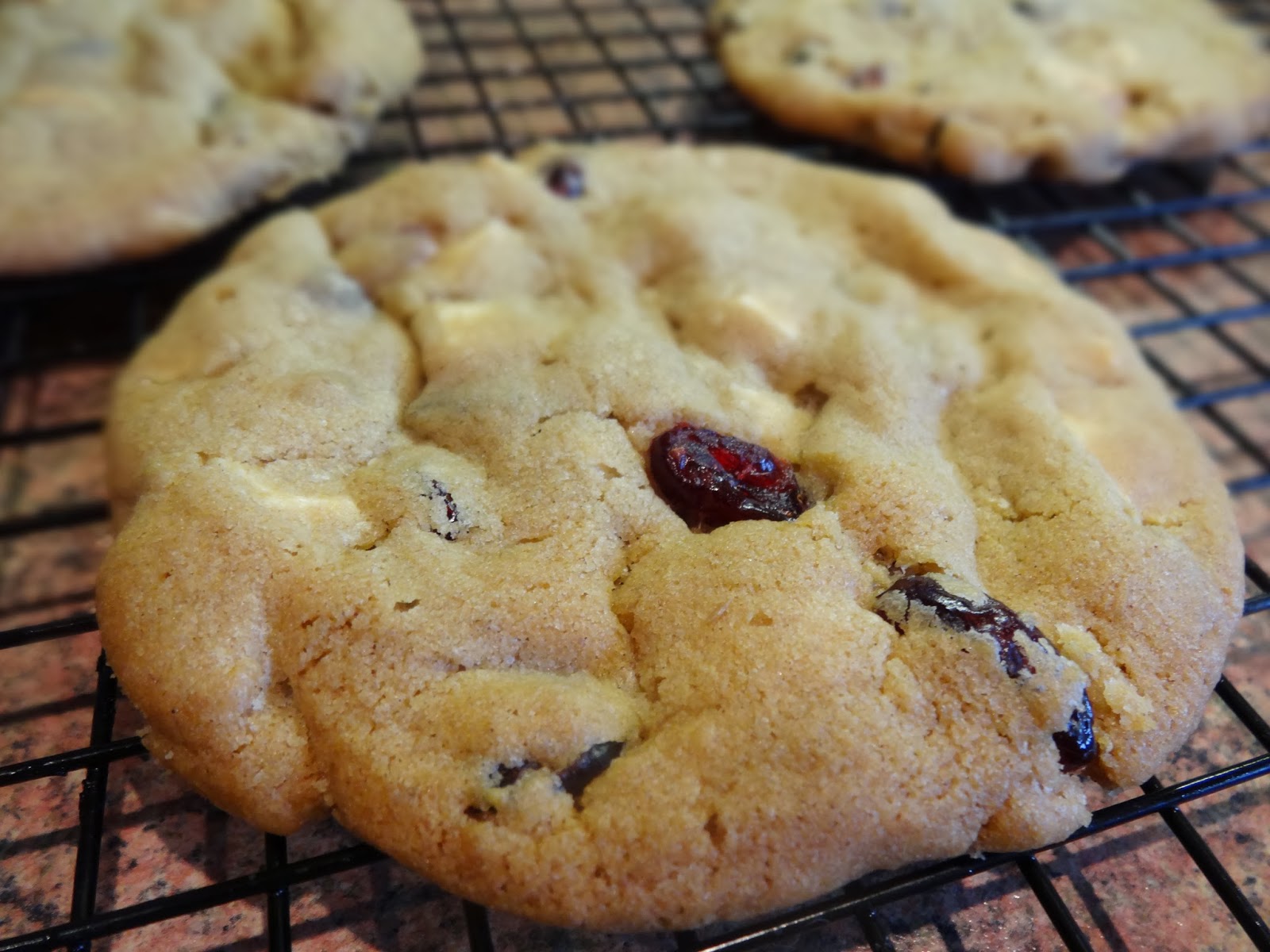
The only answer here is, when it looks right. The best indicator is the edges. The edges should be light golden brown, yet the centre should still look slightly undercooked and puffy. This is a vital step to making gooey cookies. I like to give cookies the shine test; when the shininess from the butter has just disappeared from the centre of the cookie, I know they are done.
How long should I bake my cookies for?
Always set your timer to the lowest suggested time in the recipe. You can always add a few minutes if the cookies look too raw, but there is nothing you can do to save an overbaked cookie!
What do I do when I think they are done?
When you think they are ready, take them out of the oven and leave them to cool on the baking sheets for at least 5 minutes. The residual heat from the sheet will continue to cook them. You'll know when to transfer them onto a wire cooling rack when the centres of the cookies have fallen and they have a golden brown rim around them.
They're still not gooey. What can I do?
You can try using melted butter, or try using a little less flour.
Rosie Bakes It Easy Cookie Recipes

Mint Chocolate Chip Cookies
Imagine the taste of an Aftereight mint in a ooey-gooey-crunchy cookie. The texture of these cookies is just perfect; the fresh minty taste is something that many people will not have had in a cookie before. Everybody I've tested these on loves them, and they are so easy to make - you can whip them up in less then half an hour...
Peanut Butter Cookies
Oooooo these are good. Crunchy on the outside, gooey on the inside cookies with crunchy peanut butter, chunks of dark chocolate and wholesome oats. The combination of saltyness and chocolateyness is what I think makes the tastiest, most addictive "I need another one" cookie...
Dark Chocolate Cookies
Described by many (i.e. my best friends) as being "the best cookies I have eaten in my entire life", this really is my ultimate double chocolate cookie recipe. These really do beat supermarket cookies. Trust me, these cookies will impress people...

Chocolate Chunk Cookies
Here is a nice and easy chunky chocolate cookie recipe for you to try. When making cookies, I always strive for the perfect texture above anything else - gooey in the middle, crunchy on the outside, with oozy bits in between. The key to this is to ever so slightly underbake them...
Oat and Raisin Cookies
Oats and raisins, a match made in heaven and also slightly nutritious (well I like to think so!). I love these cookies at any time of day - they are my all time favourite cookie. If you like your cookies gooey, make sure to take them out of the oven as soon as they start to go golden on the edges...

These look so perfect with flaked almonds on top and taste delicious. They are crisp on the outside and gooey on the inside - how a cookie should be! What's more they are so easy to make...
Big Fluffy Scones

Here's my top 10 tips for perfect fluffy scones:
- Use strong flour instead of plain flour
- Use cold ingredients so that the butter doesn't melt until it's baking, then it will form nice pockets and layers as it rises
- Don't knead or overwork the dough else it will become tough, just mix it gently until all of the ingredients are incorporated
- Your dough mixture should be wetter and stickier than you might think
- Flour your surface and the top of the dough well, then fold it over, rotate and repeat the folding a few times to get layers of air and flour into the dough
- Roll your dough out nice and thick, about 2.5cm. It should double in height when baking
- Flour your cutter to stop the dough from sticking for nice edges, and never twist your cutter as this will stop the scones from rising evenly
- When glazing, only glaze the top as if any drips down it will prevent an even rise
- Arrange your scones so that they are almost touching on a lined baking tray. This will keep the sides straight and even as the scones cook
- Preheat your oven for at least 15 minutes to make sure that it is nice and hot (220ºC or 200ºC fan oven)
Subscribe to:
Posts (Atom)